




Real-Time Heat Flux Measurement: From Sensor Signal to Thermal Data
Nicolas Pelletier and Christophe Corato
Nextherm Sensing
October 7, 2026
Heat flux sensors often produce signals of only a few hundred microvolts to a few millivolts, making the entire measurement chain critical to data quality. By combining high-performance heat flux sensors with low-noise IOLITEi data acquisition and DewesoftX software, the system converts these low-level signals directly into real-time heat flux data. Measurements can be synchronized and visualized alongside temperature, pressure, current, and other test parameters for demanding thermal testing applications.
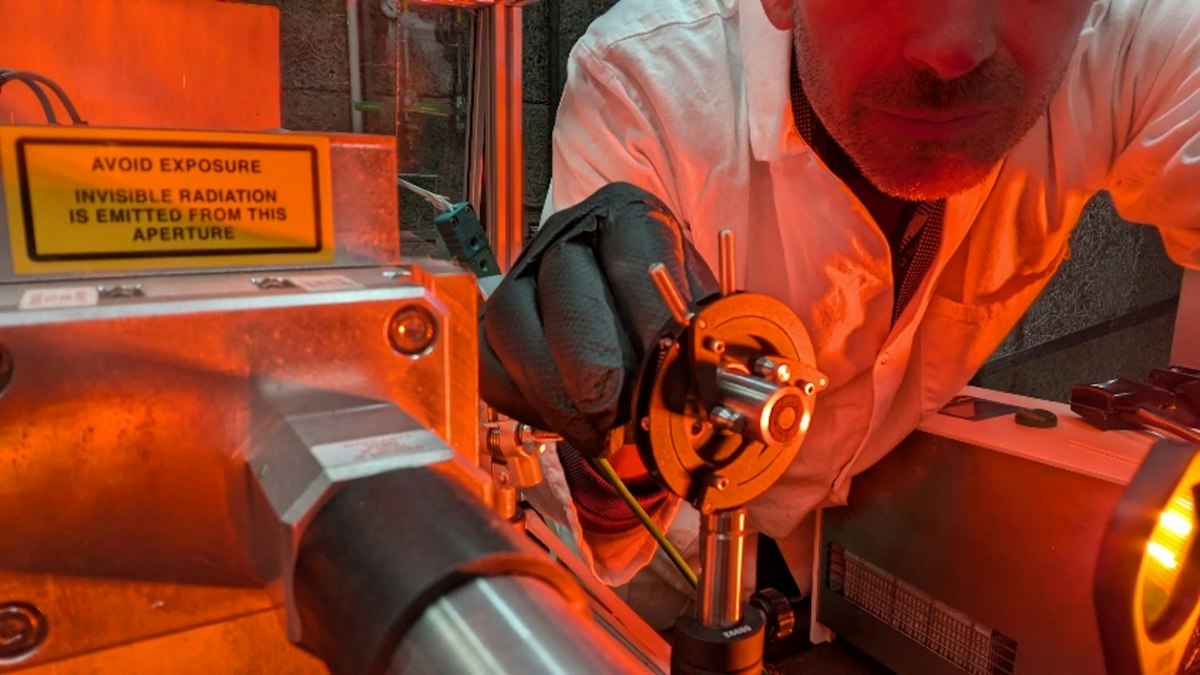
Real-time heat flux measurement
In aerospace, space, energy, power electronics, and thermal research, heat flux measurement is essential for understanding how thermal energy is transferred through or between materials and components.
Unlike temperature measurement, which indicates the thermal state at a specific point, heat flux measurement provides insight into the rate of heat transfer. Measuring these changes in real time is especially important when analyzing fast thermal events, such as combustion, propulsion, fire testing, or rapid heating and cooling processes.
Accurate heat flux data helps engineers characterize thermal behavior, validate numerical models, evaluate materials and components, and better understand how systems respond under demanding operating conditions.
Why accurate heat flux measurement is challenging
Measuring heat flux is more demanding than measuring temperature alone. Heat flux sensors typically generate very low-level analog signals, often only a few hundred microvolts to a few millivolts. This makes the measurement particularly sensitive to electrical noise, signal integrity, and the performance of the data acquisition system.
The challenge increases when thermal conditions change rapidly. Fast transients require sensors and acquisition systems with sufficient response time and bandwidth to capture short-duration variations without losing information. Measurements may also need to be performed in harsh environments, including high-temperature, vacuum, and pressurized conditions.
Heat flux is rarely measured in isolation. Thermal tests often require simultaneous measurement of temperature, pressure, current, voltage, mechanical loads, and other physical parameters. All signals must share a common time reference so that changes in heat flux can be accurately correlated with the conditions that caused them.
Measurement accuracy therefore depends on the complete acquisition chain, from the sensor and analog input stage through A/D conversion, synchronization, digital processing, and visualization. A high-quality heat flux sensor alone is not enough. The system must preserve the sensor’s low-level signal and convert it into reliable, directly usable data.
To address these requirements, Nextherm Sensing integrates its heat flux sensors with Dewesoft IOLITEi data acquisition systems and DewesoftX software. The resulting measurement chain enables low-level sensor signals to be acquired, synchronized, processed, and converted directly into real-time heat flux data.
Heat flux sensors for real-time thermal testing
Nextherm Sensing has developed heat flux sensors to meet the requirements of the most demanding thermal testing environments. Their design offers several key advantages:
High sensitivity for measuring low and high heat flux levels.
Fast response for capturing rapid thermal transients.
Excellent linearity across the measurement range.
Robust construction for demanding industrial, vacuum, and pressurized environments.
Compact, customizable designs for integration into different test setups.
These characteristics enable accurate capture of rapid heat flux variations without information loss. The sensors are particularly well suited to internal combustion engine testing, fire studies, space applications, and thermal characterization of materials.


Acquiring low-level heat flux sensor signals
Thermal heat flux sensors generate analog voltages ranging from a few hundred microvolts to a few millivolts. Measurement quality depends directly on the data acquisition system's performance.
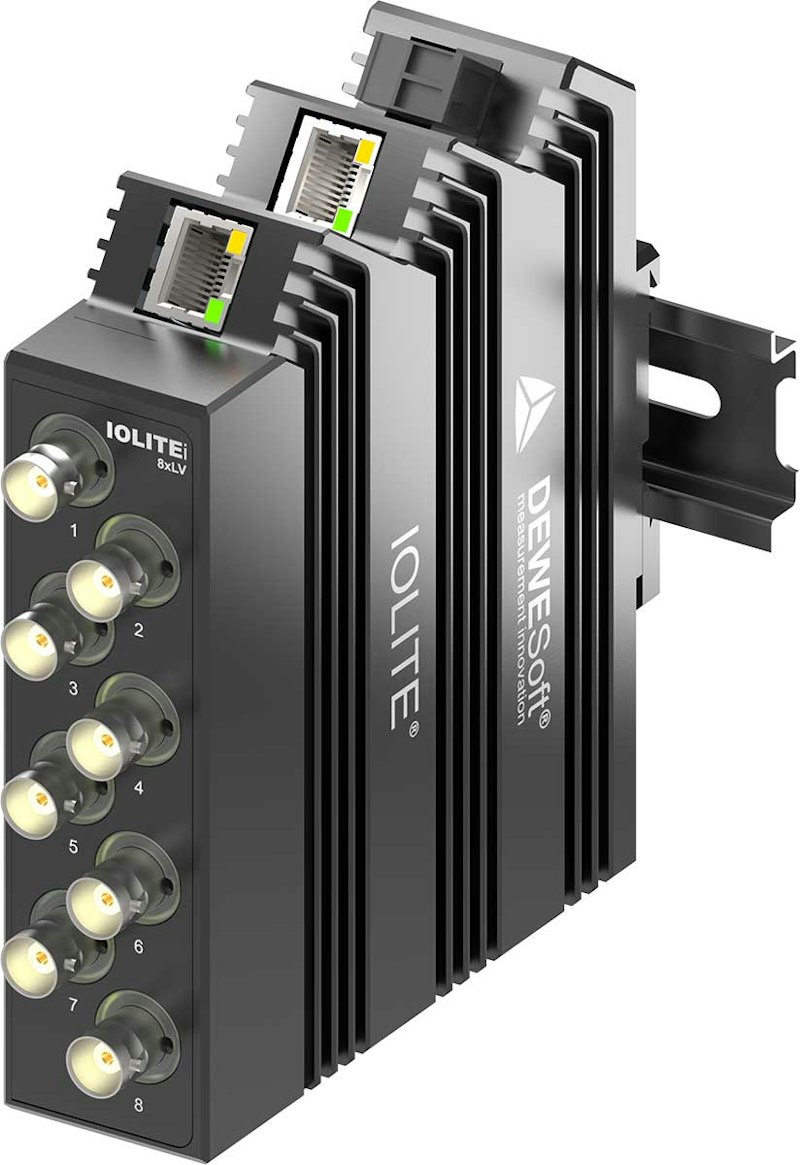
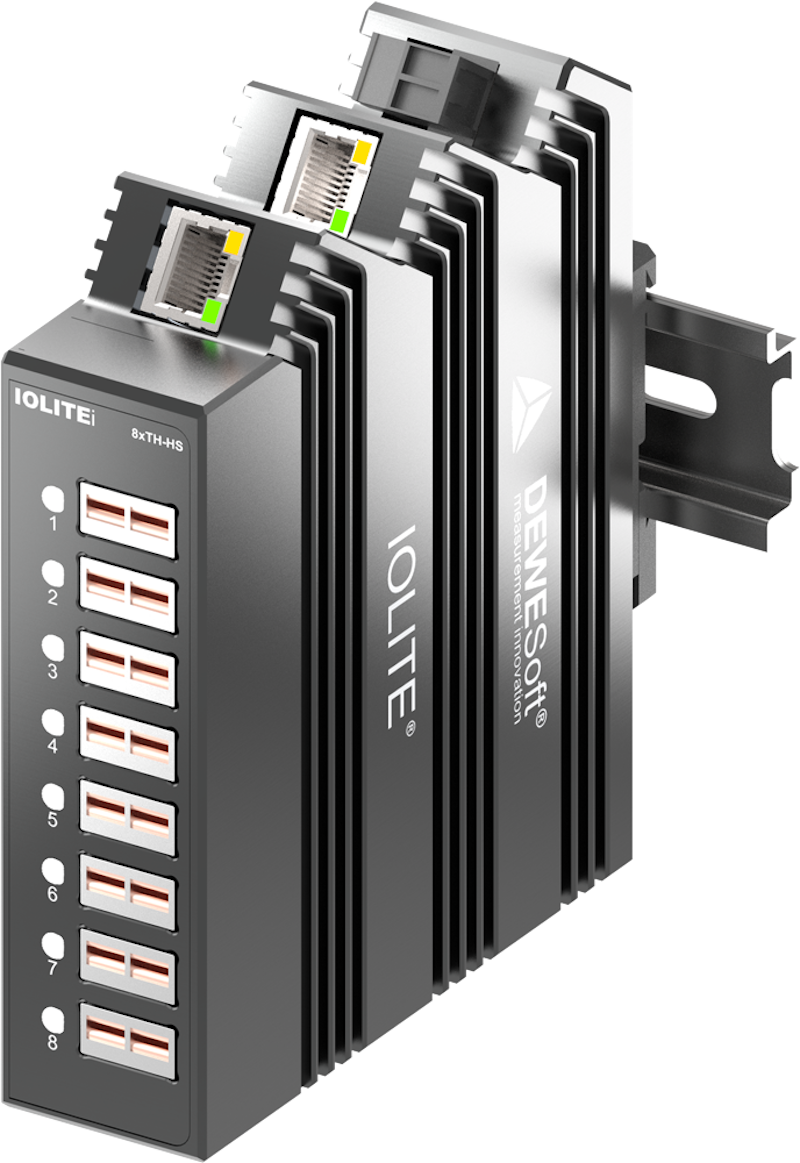
Dewesoft IOLITEi distributable amplifier modules are well suited to this application as they feature:
24-bit analog-to-digital converters;
Very low electronic noise;
Excellent common-mode rejection;
High-precision differential inputs;
Hardware anti-aliasing filtering;
High metrological stability;
Synchronous acquisition of the various physical quantities.
This architecture preserves all the information delivered by heat flux sensors without degrading the signal-to-noise ratio. The system:
preserves very low-level signals,
converts them directly to W/m² or kW/m²,
synchronizes them with other measurements,
provides real-time visualization,
reduces configuration and post-processing.
Converting sensor signals into heat flux in real time
One of the main strengths of this solution is the real-time processing performed by the data acquisition and digital signal processing software, DewesoftX.
The low-level voltages generated by the heat flux sensors are immediately acquired, filtered, conditioned, and automatically converted into heat flux (W/m² or kW/m²) using the calibration coefficient, also called the sensor sensitivity, specific to each sensor.
You no longer see an analog voltage; you see the physical quantity of interest directly.
This real-time conversion enables instantaneous monitoring of heat flux evolution during the test, without post-processing or external calculations.
DewesoftX also enables online mathematical calculations, virtual channel creation, digital filter application, alarm threshold definition, and automatic event-based acquisition triggering.


Real-time heat flux analysis in DewesoftX
Beyond simple data acquisition, Nextherm Sensing has designed dedicated user interfaces within DewesoftX to provide an immediately operational solution.
Depending on the sensor family being used, you have access to a graphical interface adapted to the application. Each interface includes, in particular:
A field for entering the sensor sensitivity;
Simultaneous real-time display of the sensor voltage and calculated heat flux;
Display of the associated temperatures, including control temperature;
Graphs optimized according to the sensor dynamics;
Preconfigured digital filters;
Instantaneous indicators for quick reading of the results.
You therefore don’t need to perform any specific programming: the system is ready to operate as soon as the sensor is connected, considerably reducing setup time and eliminating the risk of configuration errors.
This approach transforms the heat flux sensor, data acquisition, and software system into an integrated measurement instrument.


Synchronizing heat flux with temperature, pressure, and other data
Thermal testing very often requires the simultaneous acquisition of:
Heat flux;
Multiple temperatures (thermocouples or RTD probes);
Pressure;
Current;
Voltage;
Other physical parameters.
With the synchronous architecture of IOLITEi systems, all these quantities are acquired using a common time reference. This synchronization enables accurate correlation between heat flux and the other test parameters.
Heat flux measurement applications
The combination of Nextherm Sensing heat flux sensors and Dewesoft IOLITEi systems is suited to the following applications:
Aerospace & propulsion
Aircraft engines
Space propulsion
Launch-pad testing
Energy & power
Batteries and energy storage
Power electronics
Industrial furnaces
Thermal & materials research
Combustion and hydrogen research
Fire modeling
Additive manufacturing
Material characterization


Heat flux measurement on the Ariane 6 launch pad
A concrete example of multi-sensor real-time measurement in a harsh environment is characterizing the thermal environment at the Ariane 6 launch pad.
Nextherm Sensing was selected to supply custom-designed heat flux sensors for integration into various areas of the launch pad. Combined measurements of pressure and mechanical loads, synchronized with heat flux measurements, generated a rich database that enhanced and validated the multi-physics modeling of the launch pad.
This modeling is crucial for determining the launch pad's fatigue behavior and, ultimately, its service life.


Real-time heat flux measurement with Dewesoft and Nextherm
The combination of Nextherm Sensing heat flux sensors, Dewesoft IOLITEi data acquisition systems, and DewesoftX provides an integrated solution for accurate, real-time heat flux measurement.
The system preserves low-level sensor signals while delivering high-resolution acquisition, low noise, and precise synchronization with other measurement parameters. DewesoftX converts the calibrated sensor signal directly into heat flux units and enables real-time filtering, visualization, and analysis.
Key benefits of the heat flux measurement system
High-fidelity acquisition of low-level heat flux signals
Real-time conversion from sensor voltage to W/m² or kW/m²
Synchronous measurement of heat flux, temperature, pressure, electrical signals, and other parameters
Dedicated sensor interfaces that simplify configuration and reduce setup time
Real-time filtering, monitoring, and event triggering within a single software environment
Accurate capture of transient thermal phenomena with fast-response sensors and high-speed acquisition
The result is a streamlined measurement chain from sensor to physical quantity, providing directly usable thermal data while reducing configuration and post-processing requirements. This makes the solution suitable for demanding applications ranging from aerospace and propulsion testing to energy, power electronics, combustion, and thermal research.