




DLC-Coated Taps for Aluminum: Performance Under Different Lubrication Conditions
Denis Pekica
October 7, 2026
Can a DLC-coated tap improve aluminum threading performance while reducing lubricant use? Tests on seven M10 taps under oil, minimum quantity lubrication (MQL), and dry conditions show how coating, tool geometry, and lubrication affect tapping torque and process stability. The results identify MQL as a promising, more sustainable alternative, while dry tapping of Al 6082 proved unreliable.
Challenges of tapping aluminum
Thread tapping is a critical machining process because it is often one of the final production steps. A failure at this stage can result in significant losses, as the workpiece has already accumulated value through previous manufacturing operations [1].
This is particularly important when machining aluminum, a material widely used in industry because of its favorable properties [2]. Although aluminum is relatively soft, it can be difficult to tap reliably. During threading, aluminum tends to adhere to the cutting tool, which can interfere with chip evacuation, increase tapping torque, reduce thread quality, and, in severe cases, cause the tap to clog or break.
The research was conducted at the Faculty of Mechanical Engineering, University of Ljubljana. The University of Ljubljana is Slovenia’s oldest and largest university, with approximately 38,000 students across 23 faculties and three art academies.
Founded in 1919 as one of the university’s original members, the Faculty of Mechanical Engineering provides undergraduate, graduate, and doctoral education. Its laboratories support research and industry collaboration in areas including manufacturing, automation, robotics, energy, and advanced materials.
Evaluating DLC-coated taps for aluminum
The study aimed to determine whether DLC-coated tapping tools provide a measurable advantage over conventionally coated tools when tapping aluminum workpieces, particularly under dry conditions. Tapping torque was used as the primary performance indicator.
The research was conducted under the mentorship of Prof. Franci Pušavec, with support from technician Vinko Rotar at the Laboratory for Machining (LABOD), Faculty of Mechanical Engineering, University of Ljubljana. The laboratory conducts research and educational activities in production technology, with a focus on machining process optimization, advanced manufacturing solutions, and high-pressure jet-assisted machining.
We measured tapping torque using a piezoelectric rotary torque dynamometer connected to a Dewesoft SIRIUS data acquisition system.
DewesoftX software was used to monitor, record, and process the torque signal in real time.
Seven M10 × 1.5 taps were tested in aluminum alloy Al 6082 under three lubrication conditions: oil lubrication, minimum quantity lubrication (MQL), and dry tapping. We compared the average cutting and retraction torque for each tool and lubrication condition.
Oil lubrication produced the lowest and most stable tapping torque. MQL resulted in slightly higher torque but remained a promising alternative due to its significantly lower lubricant consumption. Dry tapping proved unreliable under the tested conditions, with most tools failing due to aluminum adhesion and chip clogging. The aluminum-specific, DLC-coated Tool A achieved the best overall performance, demonstrating that DLC coating can improve aluminum tapping performance when combined with suitable tool geometry and lubrication.
Aluminum tapping test setup
Aluminum 6082 test workpiece
The test workpieces were rectangular bars made of aluminum alloy 6082, measuring 150 × 50 × 25 mm. Each hole was predrilled to a diameter of 8.5 mm for M10 × 1.5 tapping. Before tapping, the hole edges were chamfered to improve tool guidance, and the workpieces were cleaned with compressed air to remove any remaining chips.
DLC-coated and conventional tapping tools
We tested seven M10 × 1.5 taps with different tool geometries, coatings, and intended applications. This selection allowed us to compare the tapping performance of DLC-coated tools with conventionally coated and universal tapping tools under the same test conditions.
| Tap | Coating | Application |
|---|---|---|
| Tool A | DLC coated | Aluminum and non-ferrous alloys |
| Tool B | DLC coated | Universal application |
| Tool C | DLC coated | Universal application |
| Tool D | DLC coated | Aluminum and non-ferrous alloys |
| Tool E | Ml/ ZrN | Universal application |
| Tool F | DLC | Aluminum and non-ferrous alloys |
| Tool G | AlTiN | Universal application |


CNC machine and tapping parameters
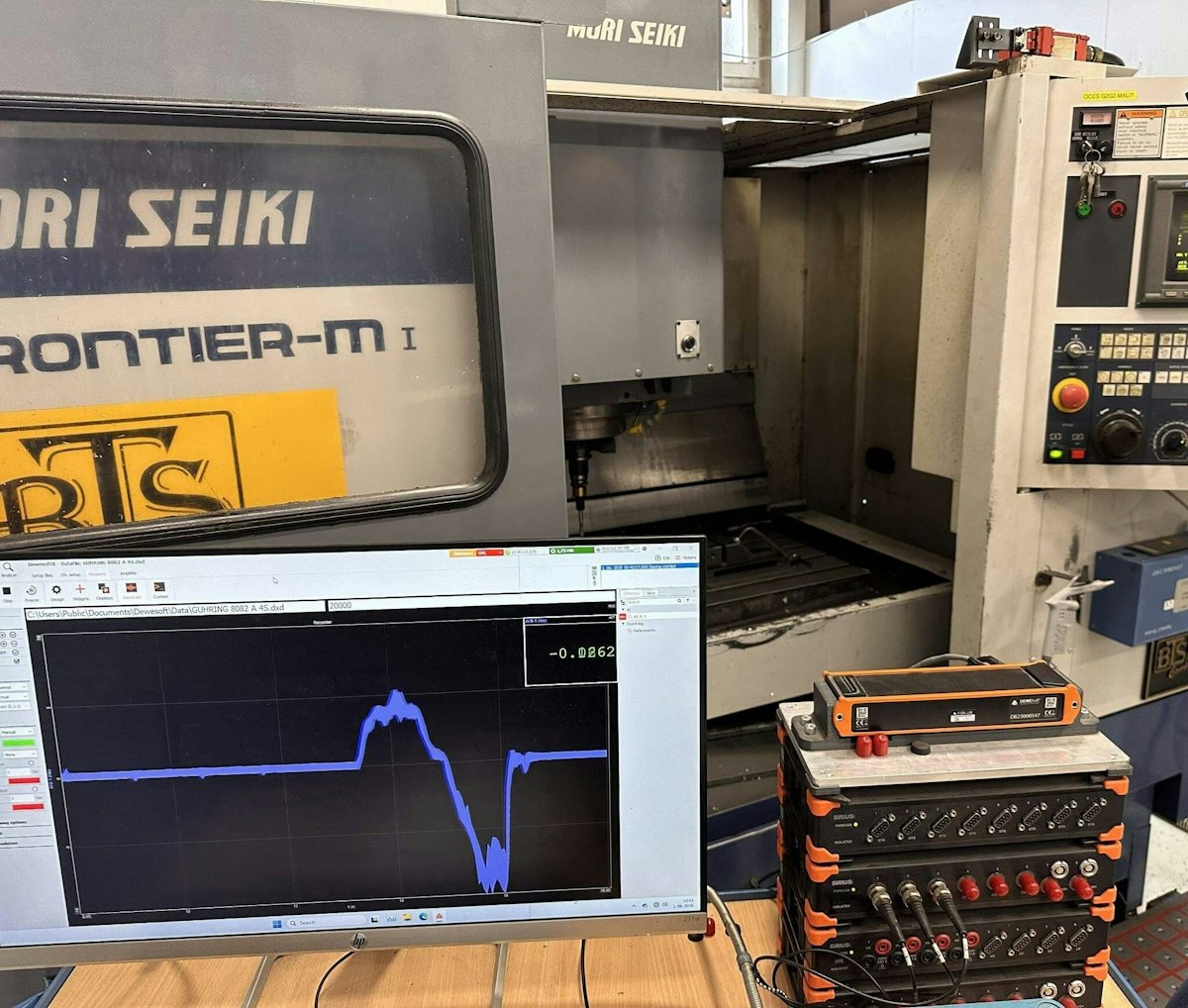
All tests were performed on a MORI SEIKI Frontier-M vertical CNC machining center. The same G-code sequence was used for each measurement cycle to ensure consistent test conditions. Before each test, the tools were calibrated to compensate for differences in tool length.
| CNC machine | MORI Seiki Frontier – M |
|---|---|
| Thread size | M10 x 1.5 |
| Cutting speed - vc | 27 m/min |
| Spindle speed – n | 850 rpm |
| Feed rate - vf | 1275 mm/min |
| Predrilled hole diameter | 8.5 mm |
| Number of repetitions | 5 per tap and condition |


Tapping torque measurement setup
We used a dynamometer mounted on the machine table to measure torque. A modular grid fixture plate secured to the top of the dynamometer holds the Aluminum workpiece firmly in place with manual strap clamps and locating stops.


To acquire torque data during tapping, we used a KIAG Swiss Type 9273 piezoelectric rotary torque sensor. The sensor signal was transmitted via low-noise cables to a Kistler Type 5070 Multichannel Charge Amplifier and then to a stacked Dewesoft SIRIUS data acquisition system, as shown in Figure 5. The SIRIUS system transferred the acquired data to a PC via USB for real-time monitoring and recording.
DewesoftX software was used for data acquisition, visualization, and signal processing. The measurement system was configured with a single analog input channel sampled at 20 kHz, providing sufficient temporal resolution to capture the complete torque waveform during each tapping cycle. The K-factor was set to 1 Nm/V.
For each measurement, the complete torque signal was recorded from the moment the tap entered the workpiece until full tool retraction. This enabled separate analysis of the cutting and retraction phases of the tapping process.


Oil, MQL, and dry tapping conditions
Three lubrication conditions were tested in this study:
Dry tapping: no lubricant was applied; the tap entered the workpiece directly.
Oil lubrication: the tap was dipped into Datron ProCut 56 before entering the workpiece.
Minimal Quantity Lubrication (MQL): Datron ProCut 56 was supplied as an oil mist using the MQL unit shown in Figure 7.
Datron ProCut 56 cutting fluid was used for both oil lubrication and MQL.


Torque measurement hardware and software
KIAG Swiss Type 9273 piezoelectric rotary torque sensor – measures torque during tapping.
Kistler Multichannel Charge Amplifier (Type 5070) - converts the charge signal into an analog voltage signal.
Dewesoft SIRIUS data acquisition system - digitizes and records the torque signal.
DewesoftX software - acquires data and processes signals.
Tapping torque measurement procedure
Our testing protocol followed this procedure:
Each tap was tested with up to five repetitions per lubrication condition
Torque was recorded from tool entry to full retraction
The raw signal was filtered
Data was exported as a CSV file
Python was used for interval detection and average torque calculation
Each signal was offset-corrected
Cutting and retraction phases were evaluated separately
Analyzing tapping torque waveforms
Figure 8 shows a typical torque waveform recorded during a single tapping cycle. The blue line represents the raw measured signal. Because the signal contains considerable high-frequency noise, we applied a low-pass FIR filter.


We selected a low-pass FIR filter because it preserves phase, which is important for time-based statistical analysis. The filter isolates the low-frequency component of the torque signal while reducing vibration-related components and measurement noise. A Blackman window was used to obtain a smoother filtered signal.


The tapping cycle consists of several characteristic stages. As the tap enters the workpiece and begins cutting, the torque increases. It then stabilizes as the tool reaches the steady-state cutting phase. Once the required tapping depth is reached, the tool reverses direction, producing negative torque during retraction.
After filtering, we exported the torque data as a CSV file and processed it in Python. Defined analysis intervals were used to ensure consistent evaluation across all measurements.
We first corrected the signal zero offset and then identified the cutting and retraction intervals. The start of the cutting interval was detected from the rising torque signal, and the average cutting torque was calculated over the stable cutting region. Retraction torque was evaluated separately using the negative-torque region recorded during tool withdrawal.
Evaluating tapping process stability
We used cycle-to-cycle comparison to evaluate tapping process stability. For each tap and lubrication condition, we analyzed up to five tapping cycles and calculated the average cutting and retraction torque for each cycle. When torque values remained similar from one cycle to the next, we considered the process stable. A rising torque trend indicated aluminum adhesion or chip accumulation on the tap.
This comparison is important because a single successful tapping cycle does not necessarily indicate reliable tool performance. A tap may complete the first hole successfully but show increasing torque in subsequent cycles, signaling a higher risk of clogging, unstable cutting, or tool failure.
Cutting torque comparison: Oil, MQL, and dry tapping
Under oil lubrication, most taps produced stable and consistent torque values across all five measurements, typically ranging from approximately 2 to 4 Nm. The two aluminum-specific, DLC-coated taps, Tool A and Tool D, performed particularly well, maintaining low and stable torque values comparable to the best-performing tools.
Under MQL conditions, tapping torque was generally slightly higher and more variable than with oil lubrication. Tool B reached the highest values, peaking at nearly 5 Nm, while most other taps remained within the 3 to 4 Nm range.
Under dry conditions, only Tool D and Tool E completed at least two tapping cycles without failure. The remaining five taps failed prematurely due to aluminum adhesion and chip clogging. Both surviving tools showed a clear increase in torque across successive measurements, indicating progressive material buildup on the cutting edges.


Retraction torque comparison: Oil, MQL, and dry tapping


During retraction under oil lubrication, all taps exhibited very low torque, typically around 0.5 Nm, indicating smooth tool withdrawal with minimal friction. Under MQL conditions, retraction torque was higher and more variable, with some taps reaching 4 to 6 Nm. In these cases, chips became trapped between the tool and the workpiece, although they did not clog the tap.
Under dry conditions, retraction torque was highly unstable, further demonstrating the negative impact of insufficient lubrication on tapping performance.
DLC tap performance under different lubrication conditions
Across all tested lubrication conditions, oil lubrication consistently produced the lowest tapping torque. MQL resulted in slightly higher torque but significantly reduced lubricant consumption by delivering oil as a fine aerosol mist. Despite the increase in torque, MQL remains a viable and more sustainable alternative to full-oil lubrication, with further potential to optimize lubricant delivery.
Under dry conditions, five of the seven taps failed to complete the full tapping cycle. Inspection revealed aluminum adhering to the cutting edges, leading to chip clogging and eventual tool failure. This behavior was also observed on DLC-coated taps, demonstrating that DLC coating alone is insufficient to prevent aluminum adhesion during dry tapping.
DLC-coated vs. conventional tap performance
Among all tested tools, the two aluminum-specific, DLC-coated taps, Tool A and Tool D, delivered the best overall performance. Tool A produced the lowest tapping torque of all seven taps under oil lubrication, while Tool D produced the lowest torque under MQL and, together with Tool E, was the only tool to complete dry tapping without immediate failure. Both tools remained among the lowest and most stable performers across the tested conditions.
The universal DLC-coated taps performed less consistently. Tool C, for example, failed during its first MQL cycle. This suggests that coating alone does not determine tapping performance. Tool geometry and suitability for the target material are also critical, particularly when machining aluminum.
The aluminum-specific DLC-coated taps also showed lower cycle-to-cycle torque variation under oil lubrication, indicating better process stability. Lower and more consistent torque reduces the mechanical load on the tap and can help lower the risk of clogging or sudden tool failure.
Practical implications for aluminum tapping
In industrial production, tapping is often one of the final machining operations. Tool failure at this stage can therefore damage a workpiece that has already accumulated significant value through previous manufacturing steps [1].
The results show that aluminum-specific, DLC-coated taps can offer advantages when machining Al 6082, particularly under oil lubrication and MQL conditions. Tool A and Tool D achieved low tapping torque and stable cycle-to-cycle behavior, indicating a more reliable process. If these improvements also lead to longer tool life, the higher initial cost of DLC-coated taps may be justified.
The comparison between oil lubrication and MQL is equally important. Oil lubrication produced the lowest torque but required a higher lubricant volume and generated more waste. MQL resulted in slightly higher torque while using considerably less oil, making it more attractive from both environmental and economic perspectives.
One limitation of the tested MQL setup was reduced lubrication during tool retraction. Because the external nozzle could not reach the tool as effectively during withdrawal as during cutting, retraction occurred under near-dry conditions. This could potentially be improved by using internally lubricated taps or increasing the delivered lubricant quantity.
The results also show that dry tapping of Al 6082 is not recommended under the tested conditions. Aluminum adhesion and chip clogging caused unstable torque and premature tool failure in most tools, including some with DLC coating. Reliable aluminum tapping therefore still requires appropriate lubrication.
Choosing the right tap and lubrication for aluminum
This study showed that tapping torque measurement with the Dewesoft SIRIUS DAQ system can effectively evaluate tool performance and process stability. By analyzing cutting and retraction torque, we compared the influence of tool coating, tool geometry, and lubrication conditions.
Oil lubrication produced the lowest torque and the most stable tapping cycles. MQL resulted in slightly higher torque but remained a promising, more sustainable alternative due to its substantially lower lubricant consumption. Dry tapping proved unreliable, with five of the seven taps failing because of aluminum adhesion and chip clogging.
The best-performing tools were the aluminum-specific, DLC-coated Tool A and Tool D. They achieved some of the lowest torque values and the most stable cycle-to-cycle performance. However, the results also confirmed that DLC coating alone does not guarantee good tapping performance. Tool geometry and suitability for the target material remain equally important.
Overall, the most promising solution was an aluminum-optimized, DLC-coated tap combined with an optimized MQL supply, offering a strong balance of low tapping torque, process stability, and reduced lubricant consumption.
References
J. A. de Oliveira, S. L. M. Ribeiro Filho, and L. C. Brandão: "Investigation of the influence of coating and the tapered entry in the internal forming tapping process," Int. J. Adv. Manuf. Technol., vol. 101, no. 1–4, pp. 1051–1063, 2019
S. Bhowmick, M. J. Lukitsch, and A. T. Alpas: "Tapping of AlSi alloys with diamond-like carbon-coated tools and minimum quantity lubrication," J. Mater. Process. Technol., vol. 210, no. 15, pp. 2142–2153, 201