




Supraharmonics in Modern Power Grids: A Power Quality Challenge

April 17, 2026
Introduction: a grid in transition
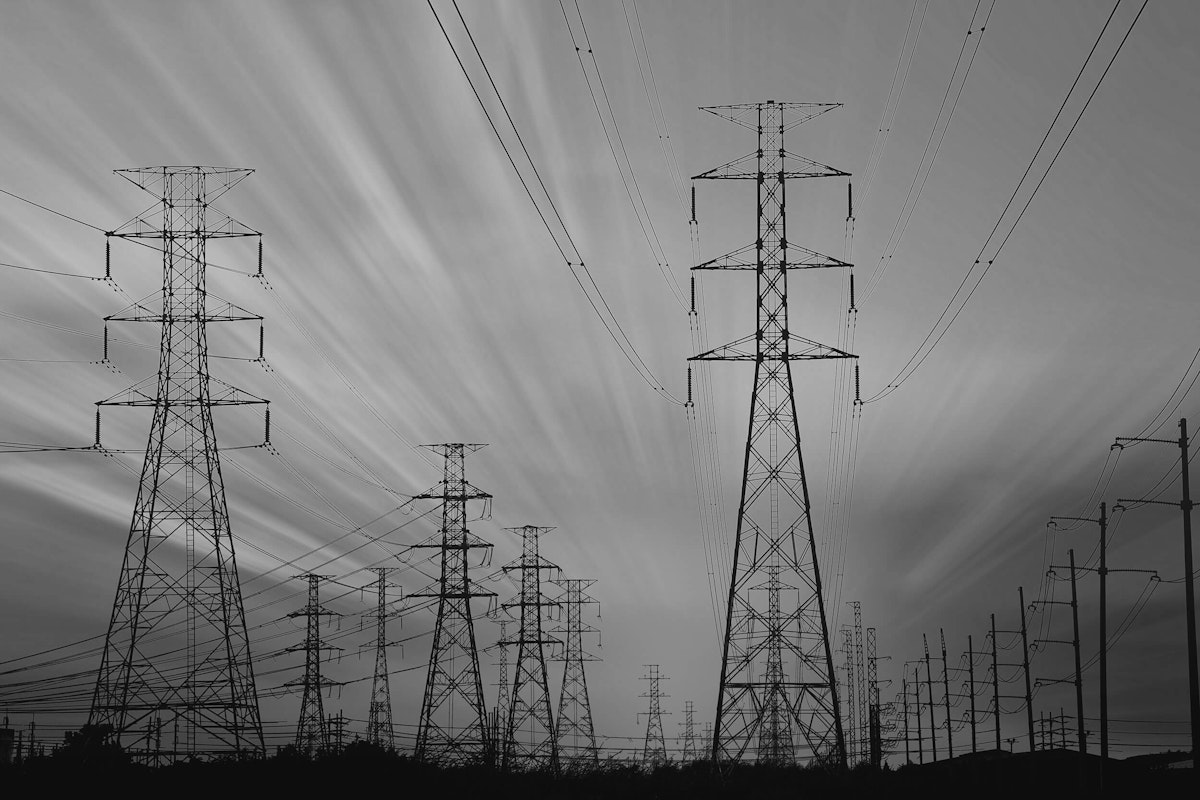
The electrical power grid is experiencing a dramatic transformation. A once-predictable system with unidirectional energy flow from centralized generation to passive loads has evolved into a dynamic and decentralized network. Non-linear loads create harmonics on electrical systems. Distributed energy resources, electric vehicle charging infrastructure, photovoltaic systems, and electronically controlled loads are now deeply embedded within both low- and medium-voltage networks.
A smart grid is an electrical power system that uses digital communication, sensing, and automated control to monitor and manage the generation, distribution, and consumption of electricity in real time, improving efficiency, reliability, and flexibility.
This transformation has introduced new complexities in power quality analysis, particularly in areas that were historically overlooked. While harmonic distortion below 2 kHz is well understood and governed by standards such as IEC 61000-3-2 and IEEE 519, a newer class of disturbances is emerging. Poor power quality is the presence of voltage, current, or frequency disturbances – such as sags, spikes, harmonics, or interruptions – that degrade the reliable and efficient operation of electrical equipment. We must be aware of them in order to manage and mitigate their unwelcome effects and improve power quality.


What are supraharmonics?


Supraharmonics are disturbances that occupy the frequency range between 2 kHz and 150 kHz.
Supraharmonics exist at the intersection of classical harmonic analysis and electromagnetic compatibility frameworks. This frequency range is becoming increasingly populated as converter-based technologies proliferate.
Harmonic filters are designed to reduce low-order harmonics, typically up to about 2–3 kHz (the classic 50/60 Hz multiples). These filters – whether passive (LC tuned filters) or active – are effective at cleaning up distortion caused by nonlinear loads like rectifiers and drives.
Unlike classical harmonics, which are integer multiples of the fundamental frequency and synchronized with the fundamental harmonic, supraharmonics arise from high-frequency switching within power electronic converters. Their spectral content is therefore not fixed. Instead, it consists of switching frequencies, their multiples, and modulation sidebands that may shift depending on operating conditions.
This lack of synchronization presents a challenge for traditional power quality measurement techniques, which often assume periodicity tied to the fundamental frequency.
Sources of supraharmonics


Supraharmonic emissions originate almost entirely from power electronic converters. These include electric vehicle chargers, photovoltaic inverters, wind turbine converters, LED drivers, variable-speed drives, air conditioners, and switch-mode power supplies used in computers as well as industrial and commercial environments.
The underlying mechanism is inherent to semiconductor switching. Devices such as IGBTs (Insulated Gate Bipolar Transistor) and wide-bandgap transistors operate by rapidly turning current on and off. These transitions generate high-frequency components that extend well beyond the nominal switching frequency.
Even when these currents are relatively small, their impact can be significant due to the electrical network's frequency-dependent impedance.
Why small currents have large effects
At higher frequencies, the impedance of electrical networks increases. The reactance increases due to inductive effects, and the resistance increases due to the skin effect.
As frequency increases, even modest currents can produce substantial voltage distortion. This is one of the defining characteristics of supraharmonics. A small current at tens of kilohertz can create voltage fluctuations and disturbances comparable to much larger currents at lower frequencies.
For engineers working in power quality testing and grid diagnostics, this represents a shift in perspective. Measurement sensitivity and bandwidth become just as important as voltage regulation or absolute current magnitude.
Propagation and interaction in the network
Supraharmonics propagate through installations in ways that differ fundamentally from classical harmonics. At higher frequencies, inductive paths such as cables and transformers present high impedance, while capacitive elements within connected equipment provide low-impedance paths.
As a result, high-frequency currents tend to circulate locally between devices rather than returning to the transformer. This creates a network in which devices are electrically coupled in complex ways.


Each device can act both as a source and as a participant in the propagation of supraharmonics. A converter generates primary emission, while other devices respond to distorted voltage through their input impedance. In many cases, this response results in additional current flow at the same frequencies, reinforcing the original disturbance.
Devices with active power factor correction are particularly important in this context. Their control systems attempt to draw current in phase with the input voltage. When supraharmonic distortion is present, they replicate that behavior at higher frequencies, effectively amplifying the disturbance through a feedback mechanism.
Resonance and amplification
As the density of electronic devices increases, so does the likelihood of resonance within the network. At resonance, impedance drops to a minimum, and circulating currents can increase dramatically. In modern installations, this condition is more likely because system capacitance grows with the number of connected devices, while cable inductance remains relatively constant.
If resonant frequencies align with converter switching frequencies, localized amplification of supraharmonic distortion can occur. This can lead to voltage stress levels significantly higher than expected.
Standing wave effects in distribution networks
At supraharmonic frequencies, the wavelength of electrical signals becomes comparable to the physical length of distribution feeders. This introduces the possibility of standing-wave phenomena, in which voltage peaks and minima form at specific points along the network.
In practical terms, this means that certain locations may experience elevated voltage stress even when overall system levels appear acceptable. These localized effects can accelerate insulation aging and contribute to long-term reliability issues in cables and sensitive equipment.
Impact on equipment and systems
The effects of supraharmonics are increasingly visible in modern installations, although they are often difficult to diagnose without high-bandwidth measurement capabilities.
Capacitors used in EMC filters are particularly vulnerable. Their low impedance at high frequencies causes them to absorb supraharmonic currents, leading to internal heating and reduced lifetime. Conductors and transformer windings are also affected, as high-frequency currents increase losses through the skin effect and other mechanisms.


At the system level, supraharmonics have been associated with a range of operational issues, including flicker in LED lighting, overheating of power supplies, and nuisance tripping of protective devices. Audible noise in magnetic components has also been reported, particularly in environments with high converter density.
Measuring supraharmonics in practice
One of the key challenges in addressing supraharmonics is measurement. Conventional power quality analyzers are typically limited to frequencies below a few tens of kilohertz and cannot capture the relevant phenomena.
Accurate supraharmonic measurement requires instrumentation with significantly higher bandwidth, often extending to 150 kHz or beyond, along with high sampling rates and wide dynamic range. Sensor selection is equally critical, as standard current transformers and voltage transformers are not designed for accurate high-frequency performance.


Modern data acquisition systems and power analyzers such as Dewesoft SIRIUS® XHS are designed to address these challenges by combining high-speed sampling, high bandwidth, and high dynamic range in a single system. When paired with advanced DAQ and analysis software like DewesoftX, engineers can visualize supraharmonic content in both the frequency and time domains, enabling a more complete understanding of system behavior. DewesoftX software is included with all Dewesoft DAQ instruments.
This type of measurement capability is increasingly important for engineers involved in power quality monitoring, grid compliance testing, and EMC diagnostics.
Learn more about Dewesoft power quality analysis solution.
Conclusion: a new frontier in power quality
Supraharmonics are no longer a theoretical concern confined to academic research. They are an emerging and increasingly important aspect of real-world power systems. As the adoption of power electronic devices continues to accelerate, the density and complexity of supraharmonic emissions will increase accordingly.
The challenge is that this frequency range has historically fallen between established standards and measurement practices. As a result, engineers must extend their tools and methodologies beyond traditional harmonic analysis.
Addressing supraharmonics will require improved measurement infrastructure, deeper analytical insight, and the gradual development of standards that reflect modern grid conditions. For organizations already working with advanced data acquisition and high-speed measurement systems, the transition is a natural extension of existing capabilities.
The frequency range between 2 kHz and 150 kHz should no longer be viewed as a gap. It is an active and critical domain of the modern electrical grid, and one that will play an increasingly important role in ensuring system reliability and performance.
We have prepared three more in-depth simulations on different aspects of supraharmonics, available in the white paper and the accompanying simulator application.
Get the full white paper
This article is based on the white paper “Supraharmonics in Distribution Networks: Origins, Propagation, Effects” by Urban Kuhar, Teo Podlesnik, and Primož Sukič.
To read the full white paper upon which this article is based, please send an email with your contact information to sales@dewesoft.com with the subject line “Supraharmonics White Paper Request.” Please include your name, company, and location.
FAQ - frequently asked questions
What are supraharmonics, and why are they important?
Supraharmonics are high-frequency distortions in the 2 kHz to 150 kHz range that are increasingly present in modern electrical grids. They are important because they represent a growing power quality issue driven by the widespread adoption of power electronics. As grids transition toward decentralized energy systems with EVs, renewable energy sources like solar inverters, and smart devices, supraharmonics are becoming a key factor in system reliability, efficiency, and compliance.
What devices generate the most supraharmonic emissions?
The most significant sources of supraharmonics are converter-based technologies. These include EV charging stations, photovoltaic inverters, LED lighting systems, and industrial switch-mode power supplies. All of these rely on high-speed semiconductor switching, which inherently produces high-frequency electrical noise that propagates into the grid.
Why are supraharmonics difficult to measure?
Supraharmonics are difficult to measure because their frequency range lies outside the capabilities of most conventional power quality analyzers, which are typically limited to the tens of kilohertz. High-sample-rate DAQ systems like Dewesoft SIRIUS XHS are specifically designed to address these challenges.
Can supraharmonics damage electrical equipment?
Yes, supraharmonics can degrade and damage electrical equipment over time. Capacitors are particularly vulnerable because their low impedance at high frequencies causes them to draw excessive current and overheat. Note: capacitors used as EMC filters are found in most household appliances. Other components, such as transformers, cables, and power supplies, can also experience increased losses, insulation stress, and reduced operational lifespan.
What is supraharmonic resonance, and why is it dangerous?
Supraharmonic resonance occurs when the natural frequency of the electrical network aligns with the switching frequency of power electronic devices. At this point, impedance drops and current levels can spike significantly, leading to amplified voltage distortion. This can result in localized overstress, unexpected equipment failures, and difficult-to-diagnose power quality issues.
How do supraharmonics affect LED lighting and electronics?
The small supraharmonic excitation that is present in voltage can interact with the supply or PFC circuit and cause resonance there, causing the LED to draw as much current on the supraharmonic component as it does on the fundamental component, increasing the total RMS current by up to 200%. This significantly reduces the device lifespan. In some cases, they lead to overheating, audible noise, or malfunction in power supplies and control electronics, particularly in environments with high device density.
Are there standards for supraharmonics?
Currently, supraharmonics fall into a gap between traditional harmonic standards such as IEC 61000-3-2 and EMC regulations. This lack of standardized limits and measurement procedures is one of the key challenges facing engineers today. However, research and standardization efforts are ongoing as awareness of the issue continues to grow.
How can engineers mitigate supraharmonics?
Mitigating supraharmonics requires a combination of improved measurement, system design, and component selection. Engineers may use filtering techniques, optimize converter switching strategies, and carefully design network impedance characteristics. Equally important is the use of high-performance measurement tools, such as the Dewesoft SIRIUS XHS, to identify sources, analyze propagation paths, and validate mitigation strategies.